
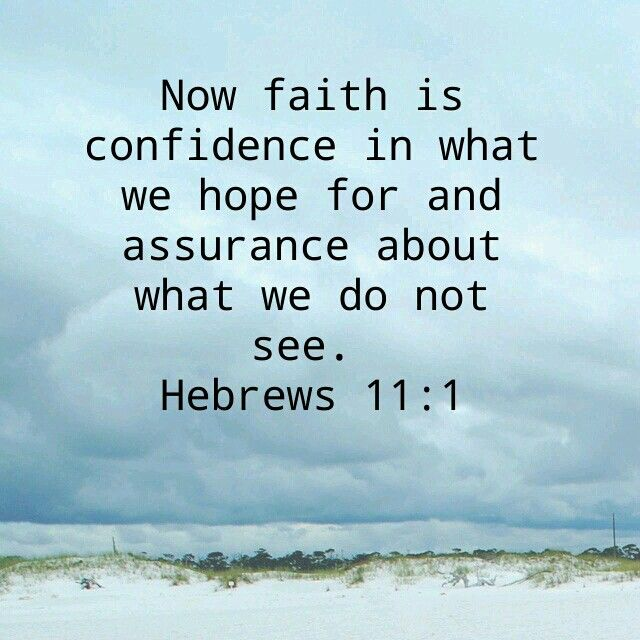
Theme: Faith: Assurance and Conviction
“Now faith is the assurance of things hoped for, the conviction of things not seen.” Hebrews 11:1
Thought:
We use the word ‘faith’ in many ways in our everyday conversation. Sometimes we tell a friend that we have faith in them, which can mean we believe they can do something, or at least that they have the intention and willpower to do their best. When wrestling with taking on a difficult or new job, I might be asked, ‘Do you have faith you can do a good job?’
I looked online to see other ways we use ‘faith’ in our everyday conversation:
- She says that her faith has given her the courage to deal with this tragedy.
- It requires a giant leap of faith for us to believe that she is telling the truth.
- Lending him the money to start his own business was an act of faith.
- Our faith in the government has been badly shaken by the recent scandals.
- His supporters have accepted his claims with blind faith.
- Nothing is more important to her than her faith in God.
- I had complete faith that my parents did what was right.
Looking online for a definition of faith gave me this result:
“Faith is a strong belief or trust in someone, something, or a particular religion, often
without requiring proof. Faith refers to great trust or confidence in a person, idea, or thing, even when there is
no direct evidence or proof to support it. It implies a sense of certainty and reliance,
such as having faith in a friend’s honesty or in the success of a plan (Cambridge Dictionary, Merriam-Webster, Oxford).”
So, what does ‘faith’ mean as used in Hebrews 11:1? In the Vine’s Expository Dictionary of New Testament Words, the Greek word translated “faith” in this verse is pistis. Pistis is defined as primarily firm persuasion,” a conviction based upon hearing (akin to peitho, ‘to persuade’), is used in the NT always of ‘faith in God or Christ, or things spiritual.’
The one thing that distinguishes faith as used in Hebrews 11 from faith as used in our culture is the object of faith. In our everyday conversations, when we speak of faith in a person or situation, the object of our faith is people or the products of people. In Hebrews 11:1, the object of faith is God, and the context from chapters 1 through 10 builds to show how dependable and faithful God is as the one we have faith in. In that sense, my definition of faith as used in Hebrews differs from Webster’s definition: “Faith is a strong belief or trust in someone, something, or a particular religion, often
without requiring proof.”
To the Jewish person for whom Hebrews was written, they would have had a long history of God proving His existence and His role as our creator and sustainer. To further distinguish the definition of faith in Hebrews from Merriam-Webster’s definition, we have Paul’s statement in Romans 1:2-4. In verse 2, Paul writes, beginning at the end of verse 1, “the gospel of God, which He promised beforehand through His prophets in the holy Scriptures, concerning His Son, who was born of a descendant of David according to the flesh.” This reminds us of the prophetic proof that Christ is God’s Son and the promised Messiah.
Then, in verse 4, we have further proof that the hope of Christ as the promised and qualified messiah rests on eyewitnesses to Christ’s resurrection. “Who was declared the Son of God with power by the resurrection from the dead, according to the Spirit of holiness, Jesus Christ our Lord.” These two arguments add to the description or definition of our hope in Christ as assurance and conviction.
John MacArthur points out in his commentary on Hebrews 11 that “Faith is living in a hope that is so real it gives absolute assurance. The promises given to the Old Testament saints were so real to them because they believed God, that they based their lives on them. All the Old Testament promises related to the future–for many believers, far into the future. But the faithful among God’s people acted as if they were in the present tense. They simply took God at His word and lived on that basis. They were people of faith, and faith gave present assurance and substance to what was yet future.” (The MacArthur New Testament Commentary on Hebrews, page 287)
Therefore, the faith the author of Hebrews speaks of here is a faith with evidence; it is not a faith with no proof.
We’ve already seen from reviewing Hebrews chapters 1-10 that what was hoped for was the coming messiah, someone greater than prophets and angels, and a permanent sacrifice greater than the temporary Old Testament sacrifices, which only ‘covered’ sin and looked to the future to the ‘once-for-all’ sacrifice in Christ.
Paul helps us understand the place of the Old Testament temporary sacrifices that were not adequate to save us. “Therefore, the Law has become our tutor to lead us to Christ, so that we may be justified by faith.” (Galatians 3:24) So, the past believers were looking forward to Christ to save them with full assurance and conviction.
Why is all this important? We live in a world where we are bombarded by media, much of it unfiltered and designed to challenge what we have been taught. It is important to hold beliefs that are backed by evidence. Hebrews 6:19 states, “This hope we have as an anchor of the soul, a hope both sure and steadfast.”
Reflection:
I find that regular reading and meditating on the Bible helps me focus on God, and passages like the Psalms especially remind me that God is my rock in whom I can trust. When you read the Bible, are you looking for what it teaches you about God and His character? Growing in understanding of God’s character builds our faith in God’s faithfulness.
Prayer:
Lord, thank you for the hope I have in Christ. Thank you for salvation and the assurance of a close, growing relationship with you. Thank you for your faithfulness.
For further posts on “Let’s Grow in our Faith,” visit https//:stanjohnsonwriting.com
Leave a Reply